 SMEPro
The Hidden Cost of Illegible Handwriting in Shop Ledgers (And 3 Ways to Fix It Today)
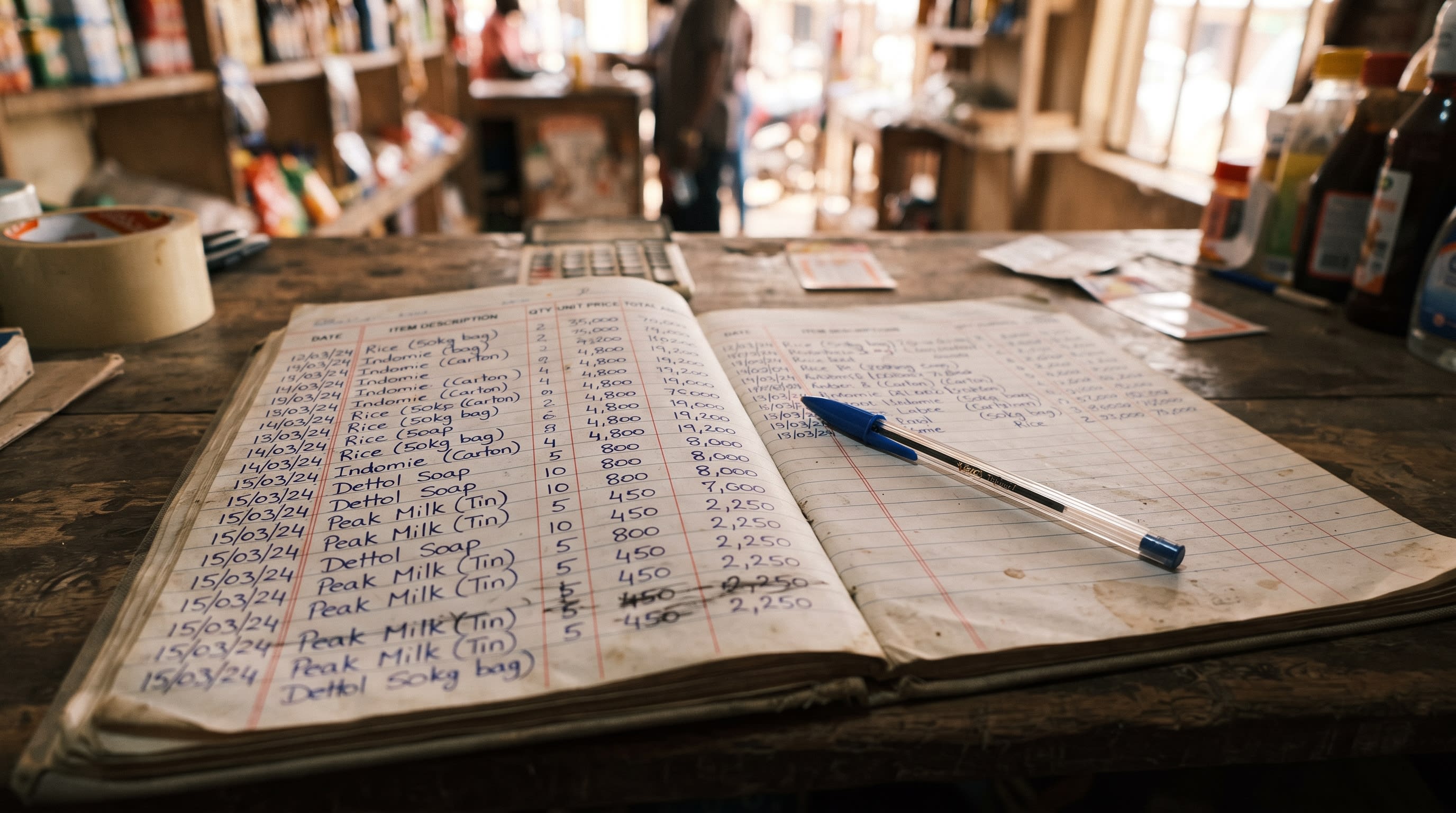
Why Handwritten Ledgers Break Down Over Time
A ledger looks fine on day one. But give it a few months, and cracks start to show — and they're rarely dramatic. They're small, quiet failures that add up:
- **Fading ink.** Cheap pens and humidity mean entries from a few weeks ago are already harder to read than they should be. - **Rushed entries.** During busy hours, handwriting gets sloppy. A "1" starts looking like a "7." A "0" bleeds into a "6." - **Illegible numbers under pressure.** The busiest days — when accuracy matters most — are exactly when handwriting quality drops the most.
The result isn't one big mistake. It's dozens of small ones, scattered across weeks, each one a tiny gap between what actually happened and what your ledger says happened.
A Simple Standardization Method
You don't need new tools to fix this — you need consistency. Three habits make a real difference:
1. **Fixed columns.** Decide once what each column means (item, quantity, price, total) and never deviate. When every entry follows the same shape, your eyes learn to scan it fast — and mistakes stand out immediately. 2. **Consistent abbreviations.** Pick one short form per item and stick to it. If "rice" is sometimes "RC" and sometimes "Ri," you've created two different products in your own records. 3. **One pen color per week.** This sounds small, but it's powerful. If Monday's entries are blue and Tuesday's are black, you can instantly tell which day an entry belongs to — even if the date is smudged or skipped.
None of this costs anything. It just takes discipline for the first two weeks, and then it becomes automatic.
The "Translation Pass" — Do This at Day's End
Here's the habit that catches most problems before they become permanent: at the end of each day, while the entries are still fresh in your memory, go back through what you wrote and **read it as if you were a stranger**.
If you can't immediately tell what a number says, fix it now — while you still remember what it was supposed to be. A messy "8" that you can still recall as an "8" today will be a mystery next month.
This translation pass takes five minutes. Skipping it is how small illegibility problems turn into permanent, unrecoverable gaps in your records.
When Paper Genuinely Stops Scaling
Standardization and daily review can carry a shop a long way — but there's a real threshold where paper stops working, no matter how disciplined you are.
That threshold usually shows up as **volume**. Once you're making enough entries per day that:
- You can no longer do a full translation pass without it eating into closing time, or - You're flipping through multiple pages to find whether an item was already recorded that day, or - Two people are writing in the same ledger and their handwriting styles start colliding
...errors stop being occasional and start compounding. At that point, the problem isn't your handwriting or your discipline — it's that paper wasn't built to hold that much information reliably.
The Bottom Line
Illegible handwriting isn't a bad habit — it's what happens naturally to any paper system under pressure. Fixed columns, consistent abbreviations, one pen color per week, and a daily translation pass will buy you real accuracy for a long time. But know the signs of the volume threshold, because past a certain point, no amount of neat handwriting will keep paper scaling with your shop.
SMEPro's AI scanner turns even messy ledger pages into clean digital records — see how.
[CTA: Take the Feature Tour → -> landing#features]